The Hunt for an Ultrarare Machine
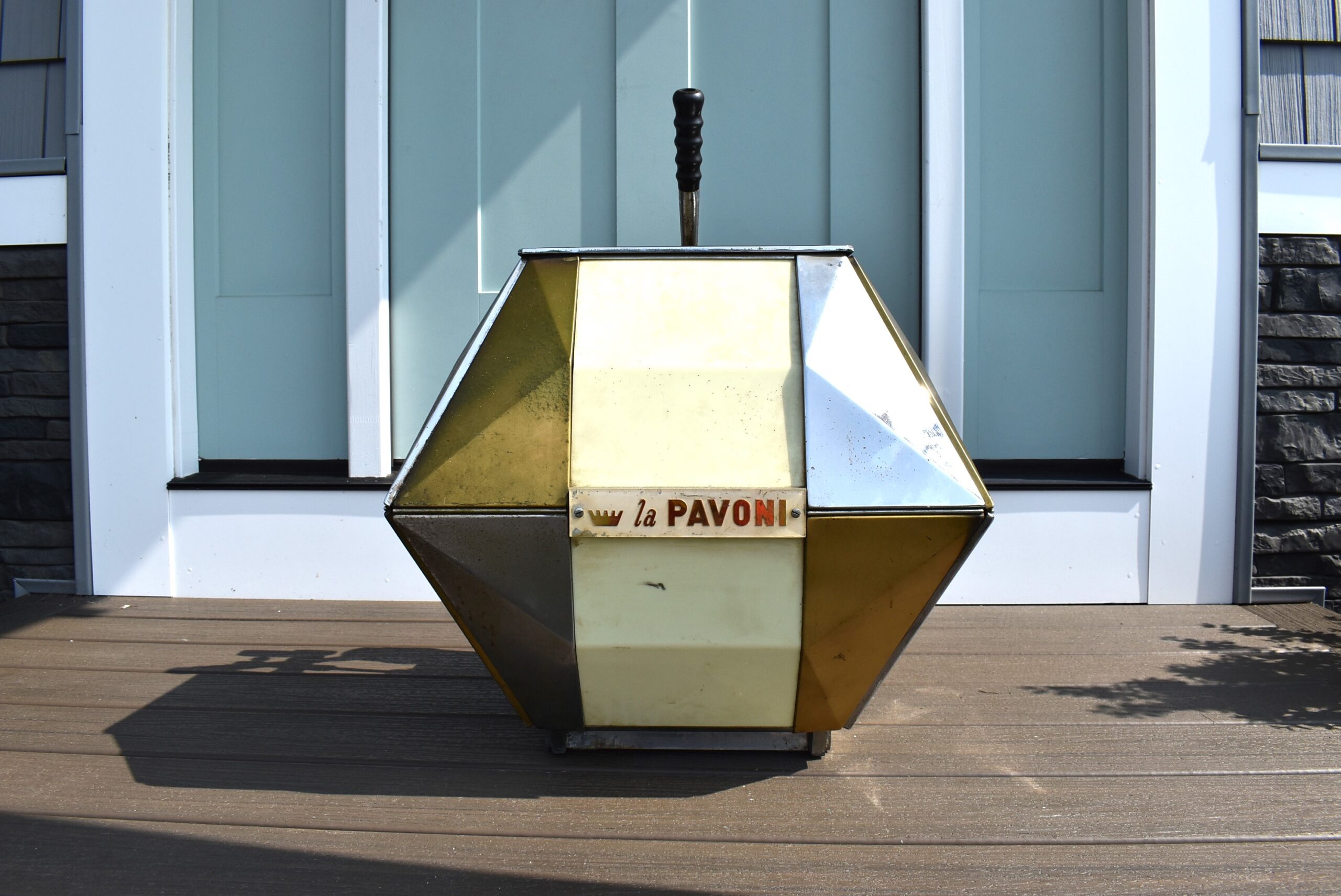
This is the story of how a possibly unique spec espresso machine traveled thousands of miles even after its original import into the United States. It is not a guide to finding machines of this caliber, but simply a retelling of purchasing one, the Concorso, and tracking its history all the way back to the original, briefly existing distributor.
Table of Contents
Origins: Discovering the Machine’s Existence
The first step to complete when trying to find any machine is discovering that it exists in the first place. Usually, common espresso machines are snapped up by resellers and listed to their list of prospective buyers, privately listed on resale sites like Facebook Marketplace or Country based sites (Subito, Willhaben, Craigslist, etc), or sold between collectors directly.
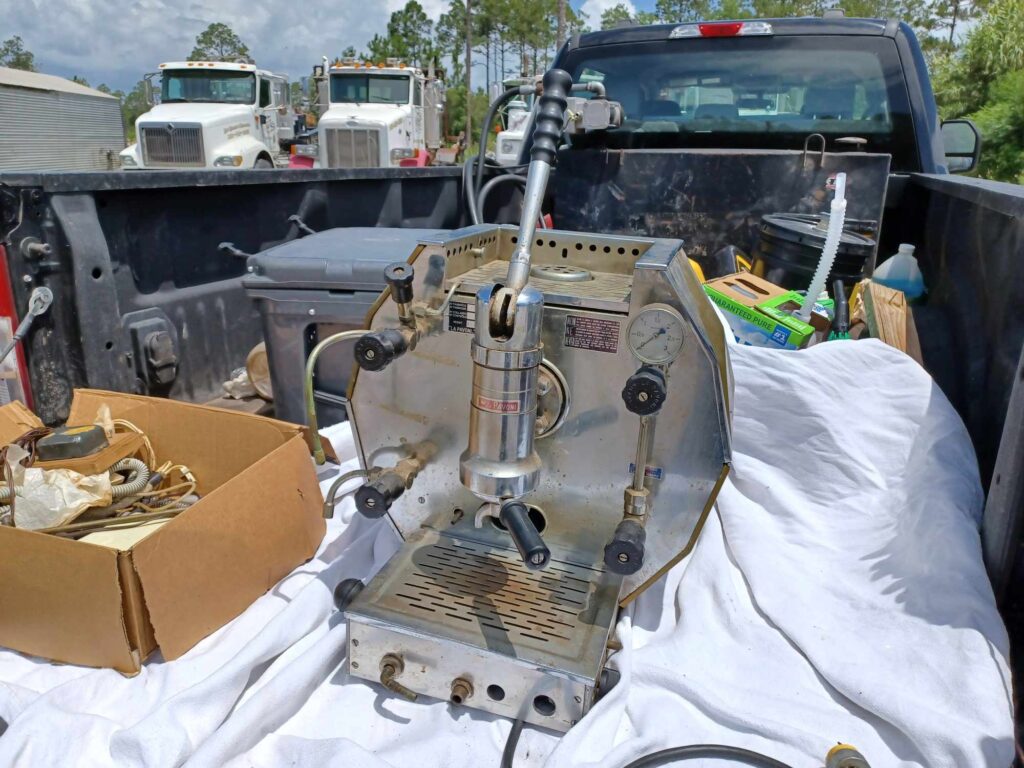
The machine that I was most fortunate to acquire was actually shared on a Facebook group in a post simply displaying the machine in 2022. What was unusual about this owner was that he was not a known collector in any of the vintage espresso machine circles, and that got my attention. The machine he shared the group was very surprising an unexpected for all viewers.
The machine he shared was a La Pavoni Concorso. For many collectors, seeing this model mentioned elicits a very recognizable image and desire. The story of how he had the machine is also very interesting. I messaged the owner at the time to provide some information about the machine, but otherwise no further developments were made for three years after that.
The Concorso’s Provenance: Bruno Munari and Enzo Mari
For a period of around 20 years starting from 1948, La Pavoni Spa collaborated with one of the titans of the Mid Century Modern aesthetic, Giovanni “Gio” Ponti. He collaborated with La Pavoni on their espresso machine exteriors starting with the Cornuta in 1948, and ending with the P67 in 1967.
Among the machines La Pavoni released, there was one that was the result of a design competition in 1955 announced by Gio Ponti in the architecture-focused magazine Domus for a new La Pavoni Espresso machine. He did not create the winning design, but his competition allowed the winners to bring the Concorso into existence. The design was a collaboration between two people, whom themselves would become famous after this competition, Bruno Munari and Enzo Mari.
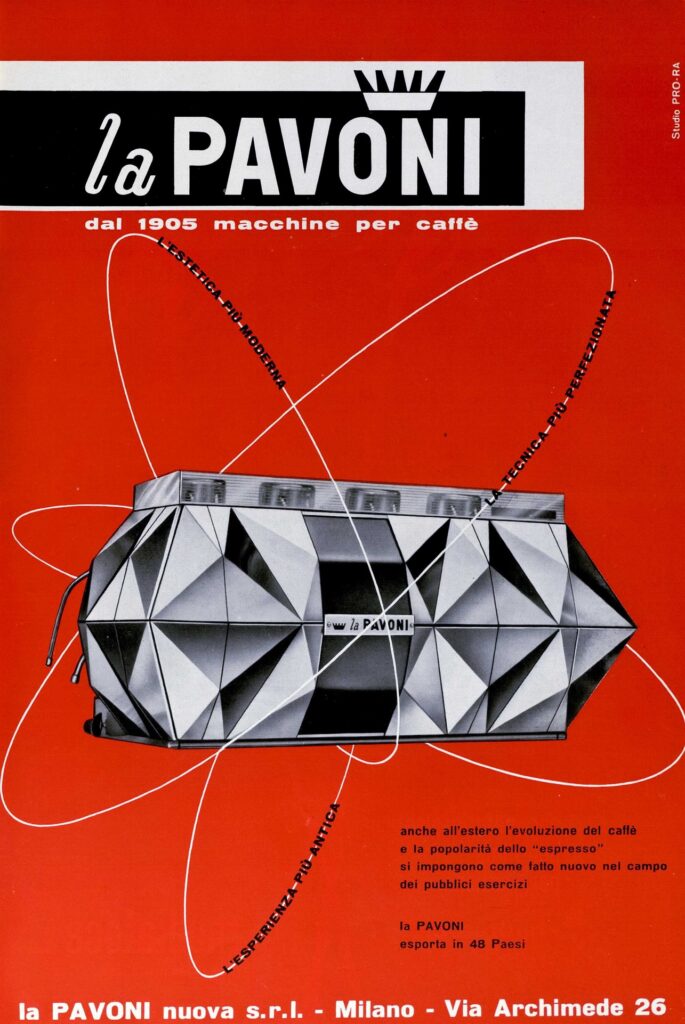
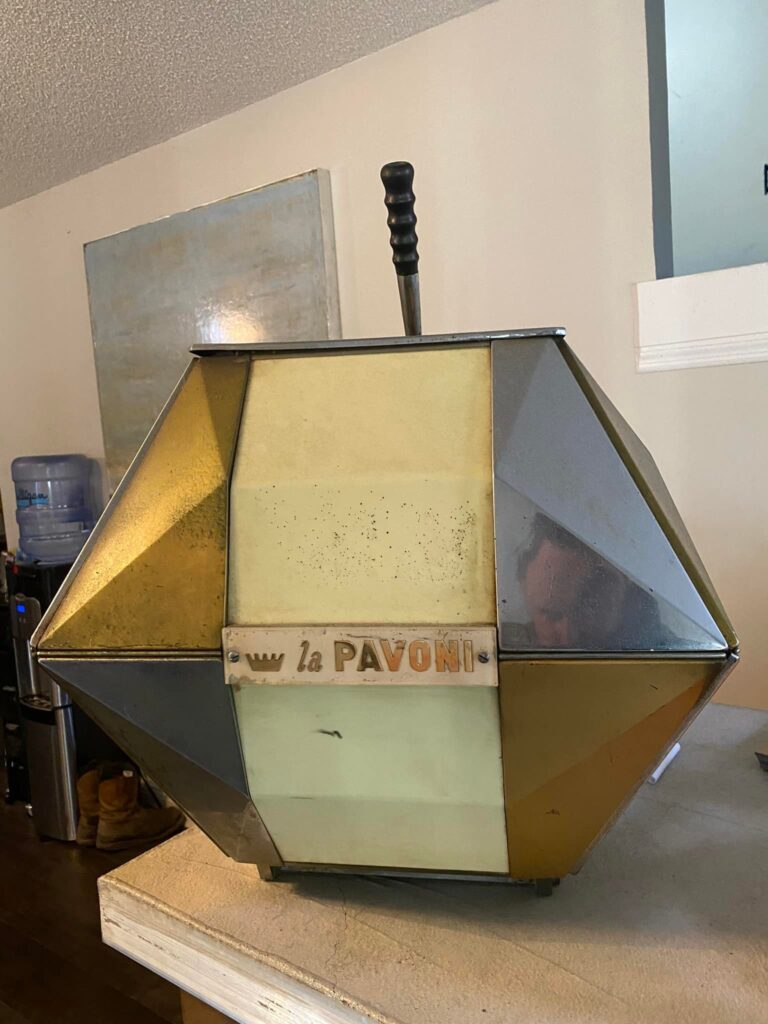
Introduced in 1956, the Concorso is perhaps the most iconic espresso machine of the 1950’s. Also known as the Diamante, it is a geometric design inspired by modern architecture of the era that is segmented in sections in the color of gold and silver. This allows bigger machines to simply add more sections of this repeating pattern as they get wider.
The Concorso was offered as both a hydraulic machine and spring lever machine, ranging in size from one group all the way up to a massive six groups in a dual boiler configuration (three groups per boiler). The two and three group models were by far the most common size, and collectors today desire the much rarer single group machines. As of writing this article I know of around 15 single groups worldwide.
The rarity of the single groups also results in a high price that is commensurate with high demand whenever one does appear for sale, and often parts are missing such as the cup tray plexi, valves, portafilter, etc.
The Negotiations
At the time I discovered the machine, the owner was planning to restore it himself. However, things can change over time as a project is pushed and procrastination takes hold. Eventually, he reached out to me in April of this year to state he wanted to sell his Concorso. This elicited a big interest from me, and I was fortunate enough to have extra funds prepared for a purchase of this caliber.
Sometimes, true bargains can be found, but this case was an instance where both the seller and buyer knew the item in question was special, and negotiating was necessary. More common espresso machines do have a ‘market’ value that generally follows a known trend. Machines like the Faema E61, which usually can sell from €1700-2500 for a single group and €1000-1500 for a two group unrestored (this is further discussed in My Sourcing and First Project page)
The Concorso falls into the ultrarare category in that there is no set market price, but rather depends on an agreed price. This price is dependent on a few factors.
- The location of the machine being offered
- The scarcity of the ultrarare
- The brand (some brands like La Marzocco commend premium prices)
- The number of people who know about the machine and are interested in purchasing it
- Language barriers
These factors contribute towards what I am willing to pay and how much the seller prefers. I will explain each factor as thus:
Location: The machine was being offered in Florida, which is extremely unusual for a machine of this caliber to be found in the USA, and I would be surprised if another is found. This is important because there were two other interested buyers that were very far away, one in Europe and one in Australia. Besides one other machine, all other examples of single groups were found in those two places
Scarcity and Brand: There are other machines of higher scarcity, but La Pavoni is a very famous brand that is well known, and many collectors desire to have a name-brand machine in their collection. The fact the machine was also designed by two famous mid-century modern designers in a competition adds to the allure.
Competition: Three prospective buyers including myself were interested in the machine. There was no bidding war, but there was a reasonable expectation of what each buyer was willing to pay.
Language barriers: There is a big advantage for the buyer and seller to be able to speak and write well to each other. It can establish a more familiar understanding, while relying on second language skills or Google Translate can impede on negotiations. I speak and write good Italian, but I have historically felt inadequate sometimes if I wanted to get the best price for a purchase. Speaking English with the seller really helped me, and my final agreement with him was held on a phone call.
Overall, a month passed before a final price was settled. I conversed with other collectors who had this machine, and from that understanding I believe the final price was fair for both me and the seller.
Picking up the Machine: 1600 Miles Driven in Two Days
The seller did not want to ship, and a big advantage for me against the two other buyers was that I was willing and able to collect the machine in person. I setup a one way plane ride to Jacksonville, Florida and a one way car rental to drive to the seller in Carrabelle and then return to Rhode Island.
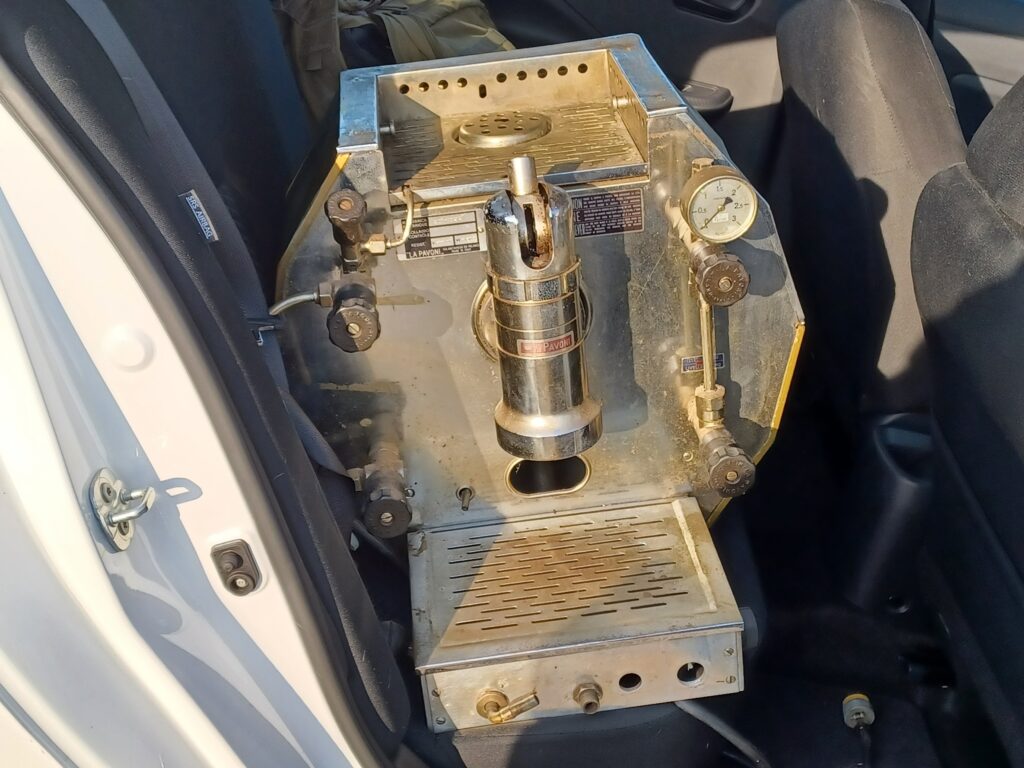
Starting at 4:00 am on Friday June 6th, my D-Day commenced. With my dad, we flew down to JAX, and picked up the machine around noon the same day. We proceeded to drive for the rest of the day and ended up in Columbus South Carolina that night. We returned to Rhode Island at 11:30 pm on Saturday. 36 hours of travel for the Concorso.
The Origins
The machine had three prior owners before me. This particular Concorso has a unique history in so far being the only known 110V single group, the rest being 220V. The reason mine is 110V is because it is one of the few Pavoni machines that was imported for the US market from the factory.
This happened through a San Francisco distributor that was an official Pavoni representative for around 4-5 years if I understand correctly during the late 1950’s until around 1960/1961. I do not know how many machines he imported, but when he ceased operations he kept two machines, my Concorso and a La Pavoni Mod 54 “Baby” single group (also in 110V) that was acquired by a local collector in 2021 from the family of the distributor. I tried getting it too at the time but I was too slow by 20 minutes according to the family! I got my 3rd series Mercurio instead after that. Early La Pavoni Commercial ID, Info?
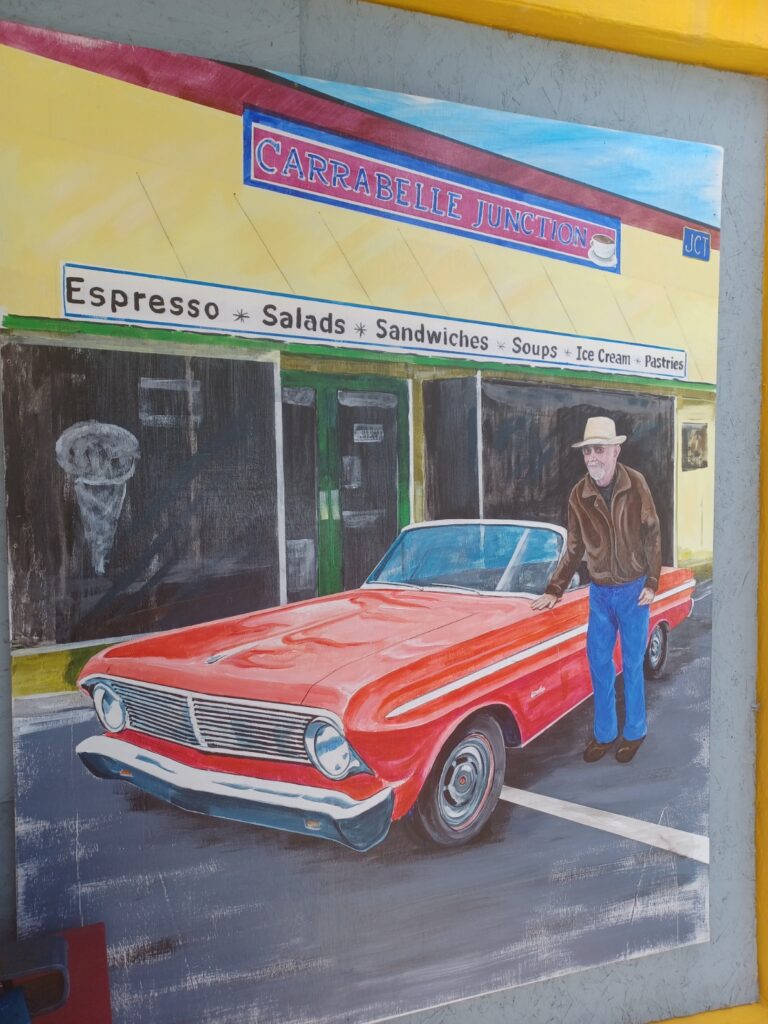
For how the Concorso ended up in Carrabelle Florida, I will shift my focus to a man who passed in 2020, who according to his brother was a true collector of all things interesting to him. His name was Ron, and I quote his brother and his obituary:”Ron was a tourist attraction, in and of himself!”
Ron was born in Cleveland, Ohio, but very early on moved with his family to West Palm Beach in 1949. His family still remains in the state, but around 1969 he moved to the Bay Area for a change in lifestyle. He would remain there for thirty years, and during that time operated two food businesses, an ice cream and coffee shop called the Daily Scoop in Potrero Hill and a deli called City Salad in Family Circus.
At some point in the 1970’s Ron acquired the Concorso from the former Pavoni distributor for his coffee shop, and operated it for some years. He knew it was special from the moment he purchased it. At some point, parts and knowledge to repair the machine became difficult to the point where he could no longer use it and had to use a different, more modern machine. This is when the machine became a display piece.
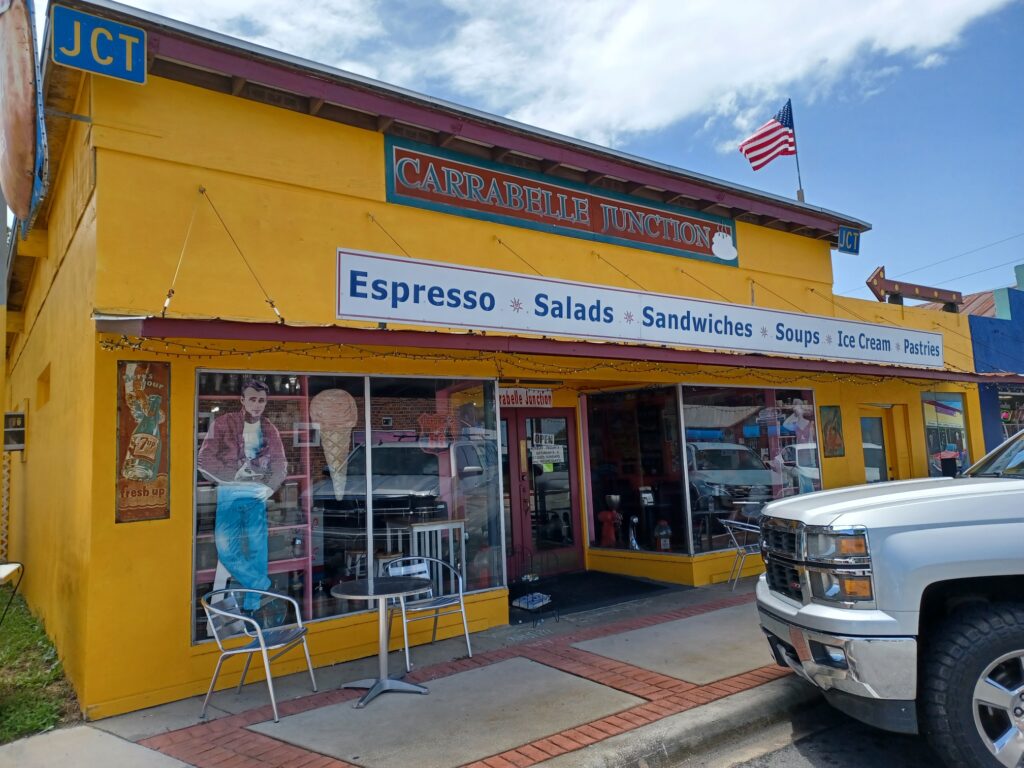
Eventually he moved back to Florida in a 24′ trailer, and among the things he brought back was the Concorso. He settled in Carrabelle because his brother liked to go there for fishing and other outdoor activities and lived not far away, but Ron himself wasn’t a fisherman or hunter. Instead he was attracted to the ‘old Florida’ laid back atmosphere/lifestyle and wanted to be closer to family. Also, he was a smooth talker and generally a friendly guy who eventually settled in with the town.
I thought the machine was on display for 40 years, but apparently the diner Ron opened was much more recent around 2010. The building itself has been around for 100 years, but the Carrabelle Junction has so far been the longest tenant. If you look up Google Map pics of the diner you can see the Concorso on display in at least three different locations in the diner over the years.
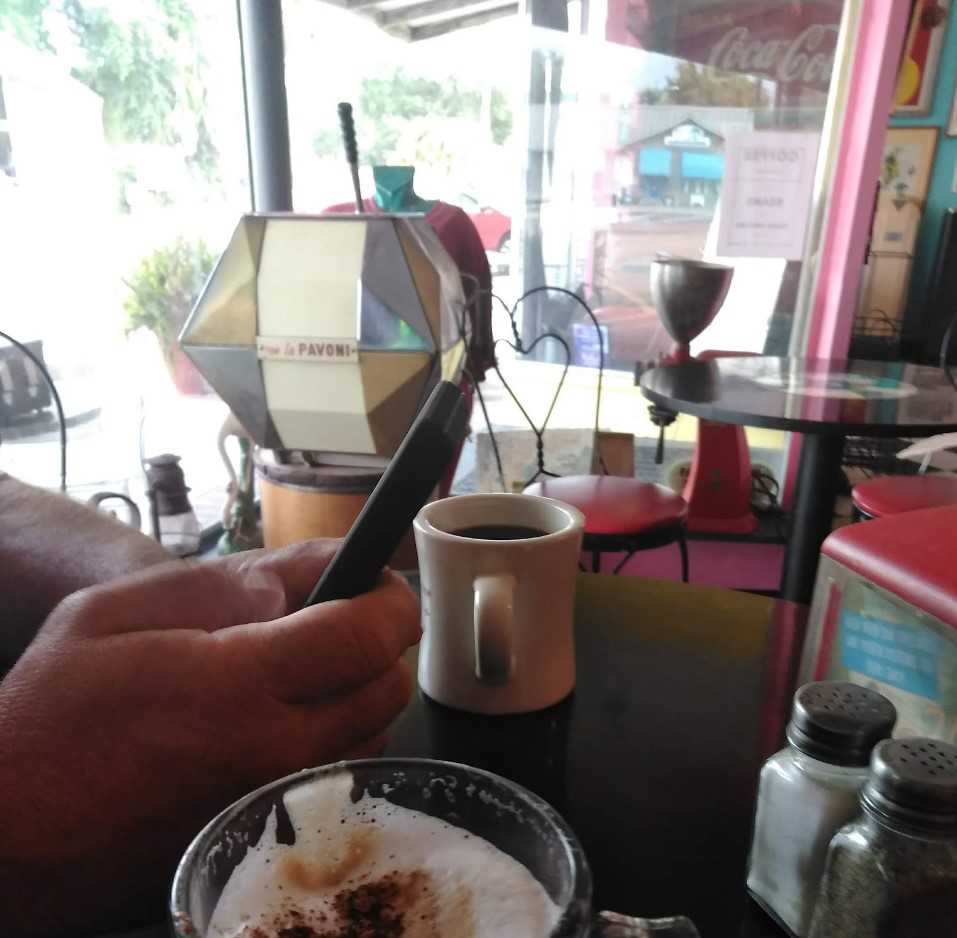
Ron passed away in 2020 due to cancer, but before he died there was a local resident, the seller in my story, that would go to the diner almost daily and chat with Ron, often about the Concorso he had on display. He wanted to purchase it for a long time, and eventually Ron agreed to sell it to him as he was selling his diner to a new owner.
Even with his illness, he personally brought the machine up to the resident along with a box of spare parts from what I was told. Ron may no longer be with us, but his memorial at the diner tells a story that he was a big loss to Carrabelle. He collected other stuff too, some of which still remains on display in the diner.
Initial Assessments
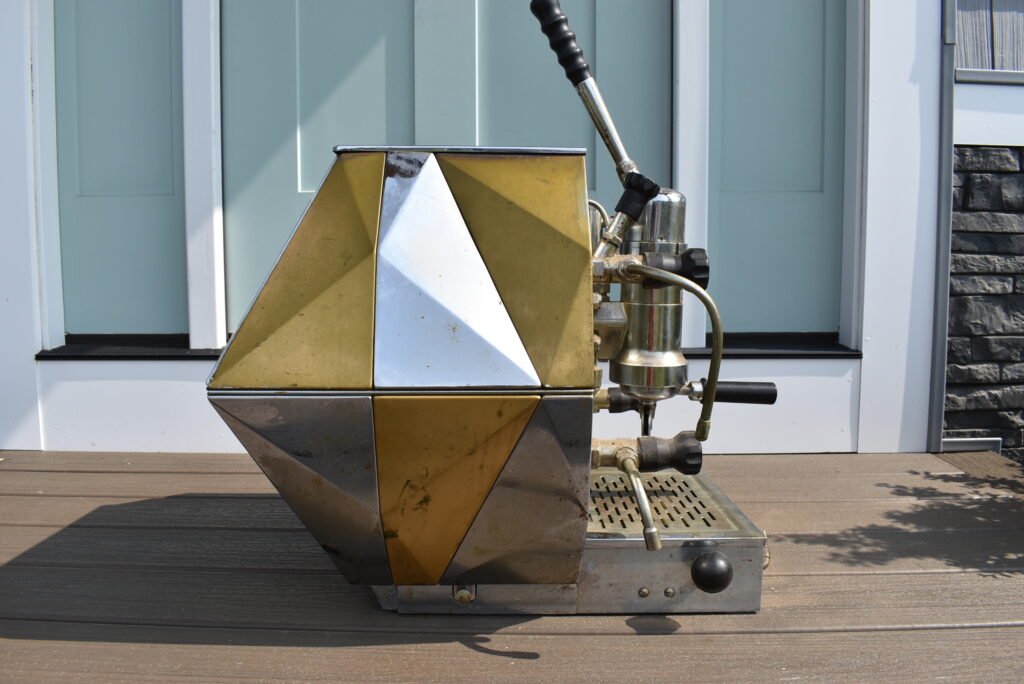
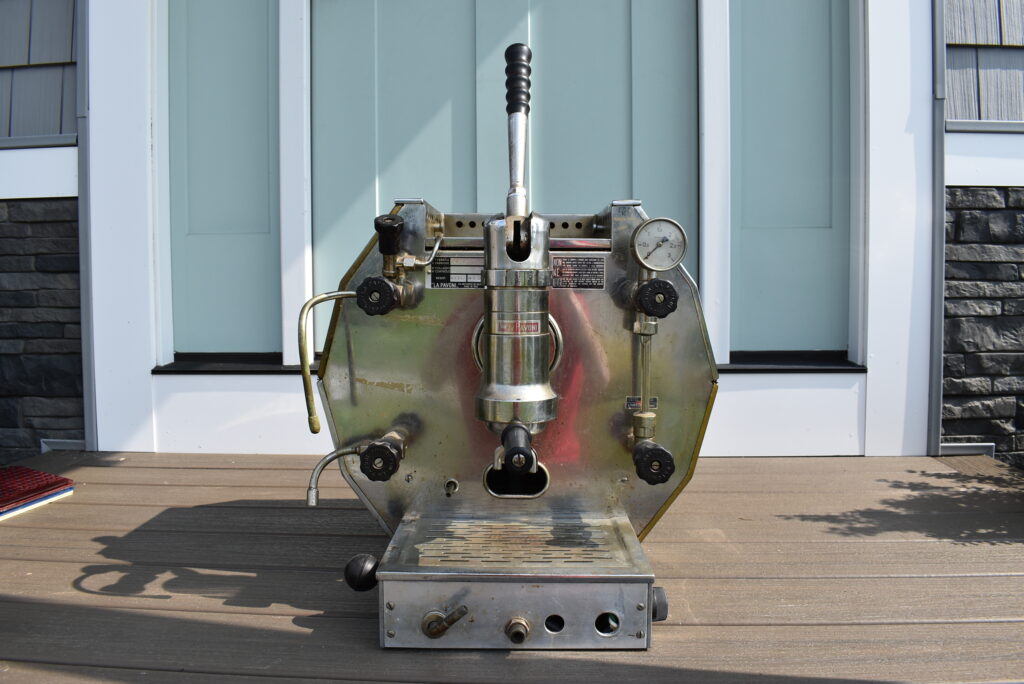
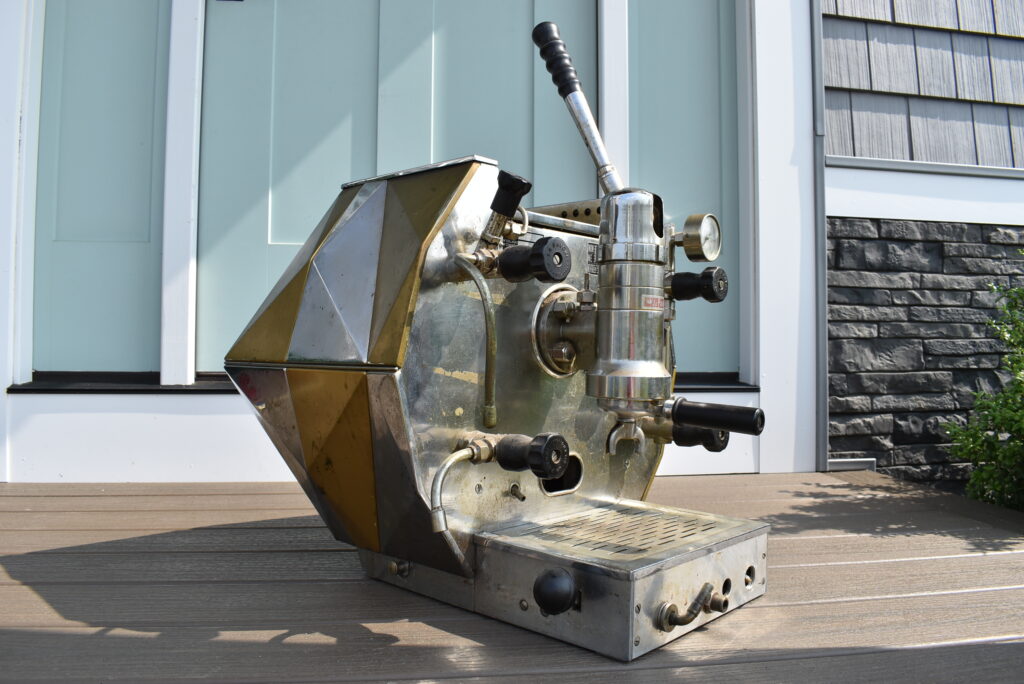
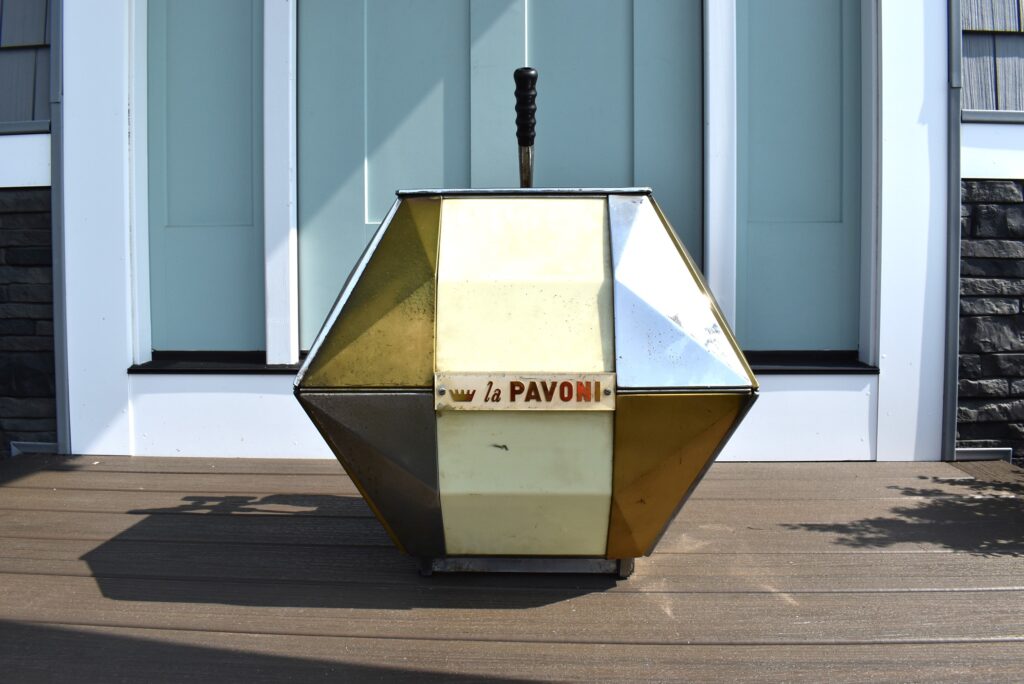
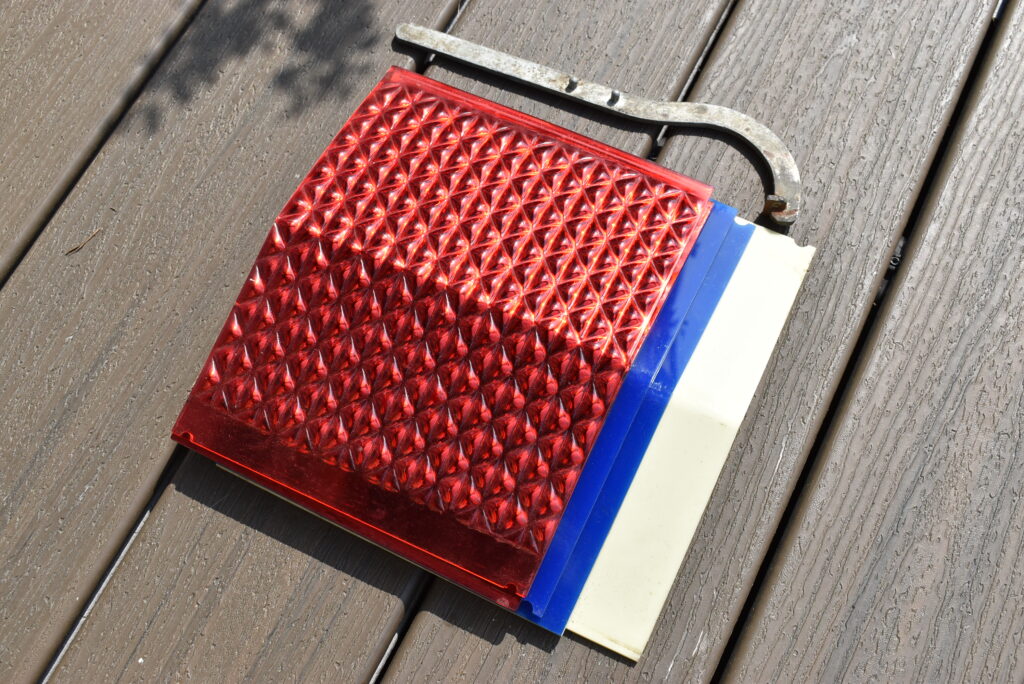
This machine is in a relatively well preserved state. The plexi on top is missing, but all the other parts are present including the often missing portafilter. One of the heating elements has a snapped stud and appeared to have a long term leak, but it should all be repairable.
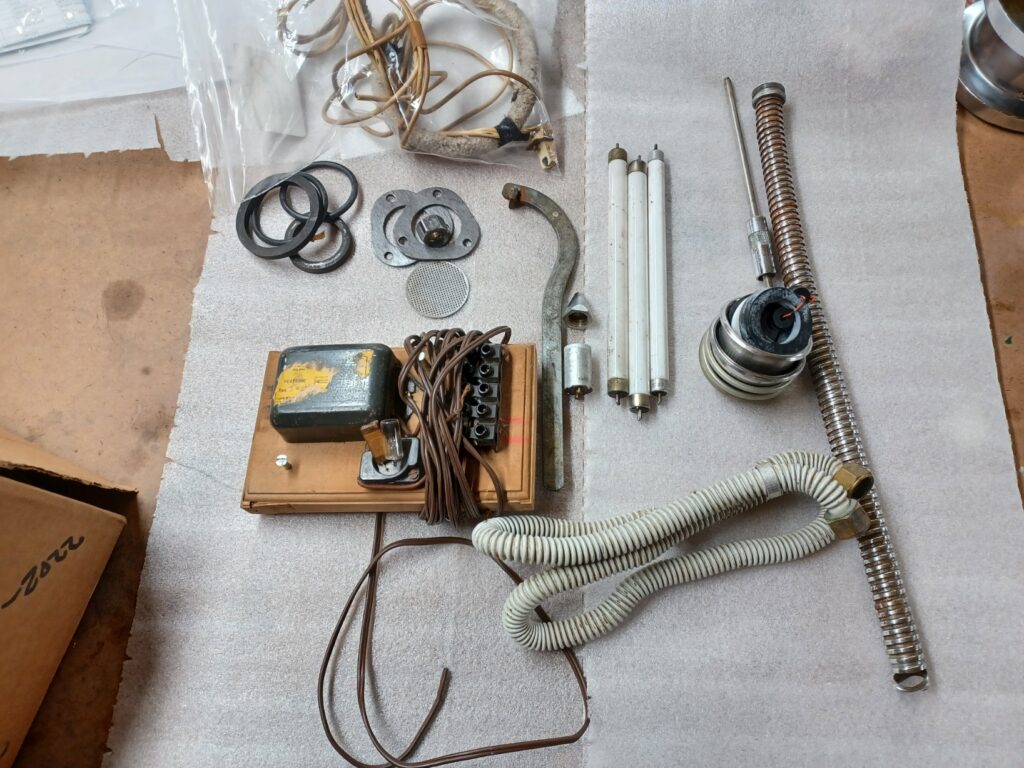
The purchase also came with extra new old stock parts, and a factory group wrench for servicing the lever group. There is not much I can honestly complain about. I am still deciding how much I will preserve when restoring the machine, but in terms of collecting, there are not many other machines I still want in my collection.
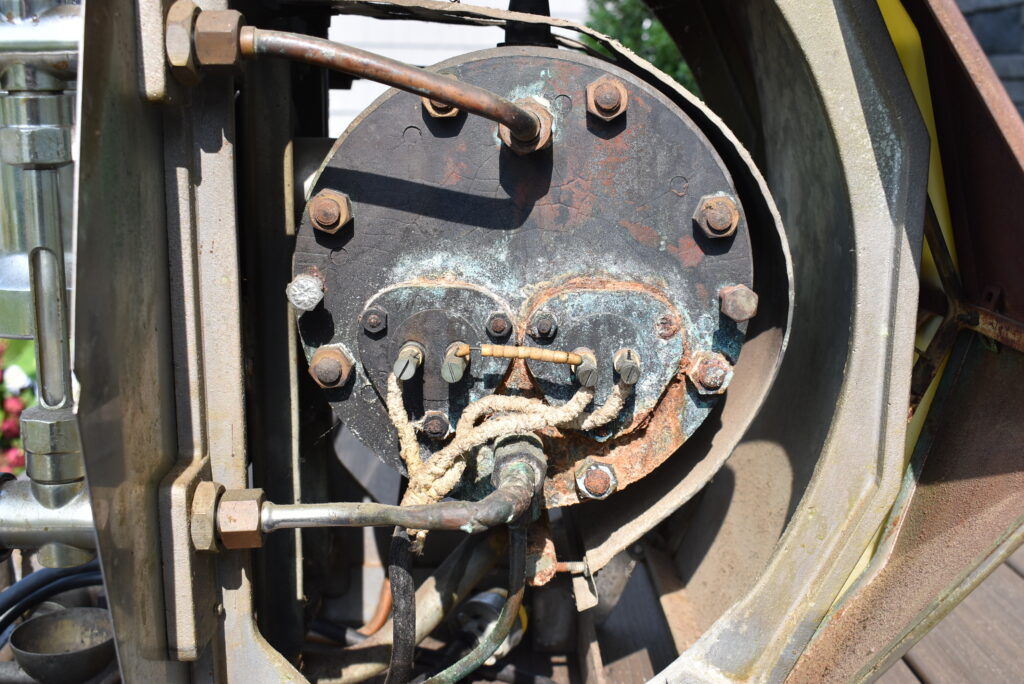
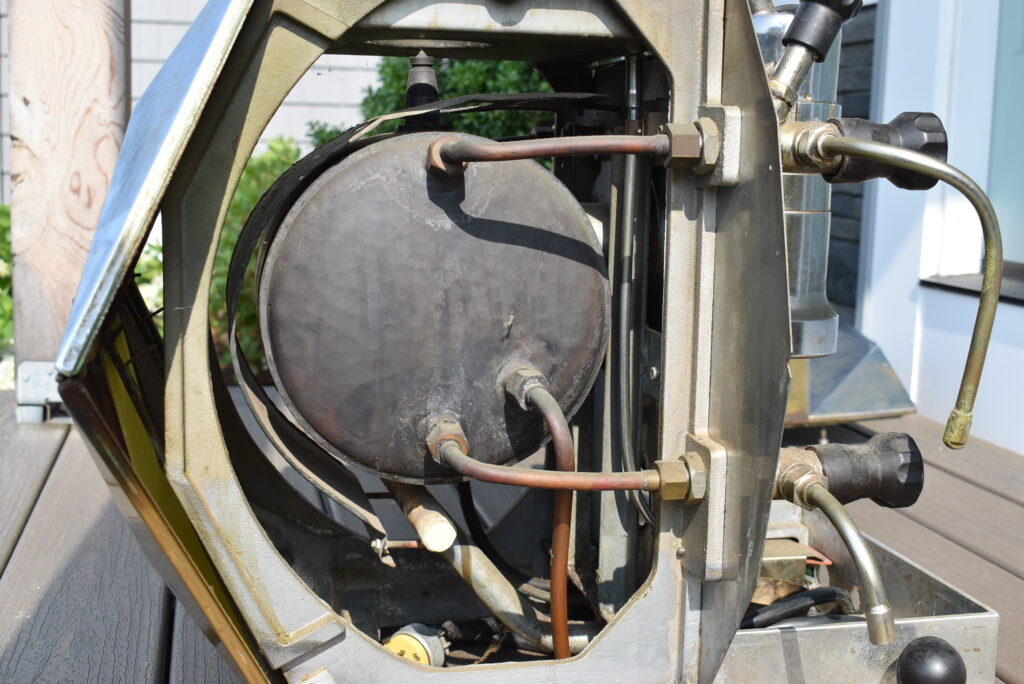
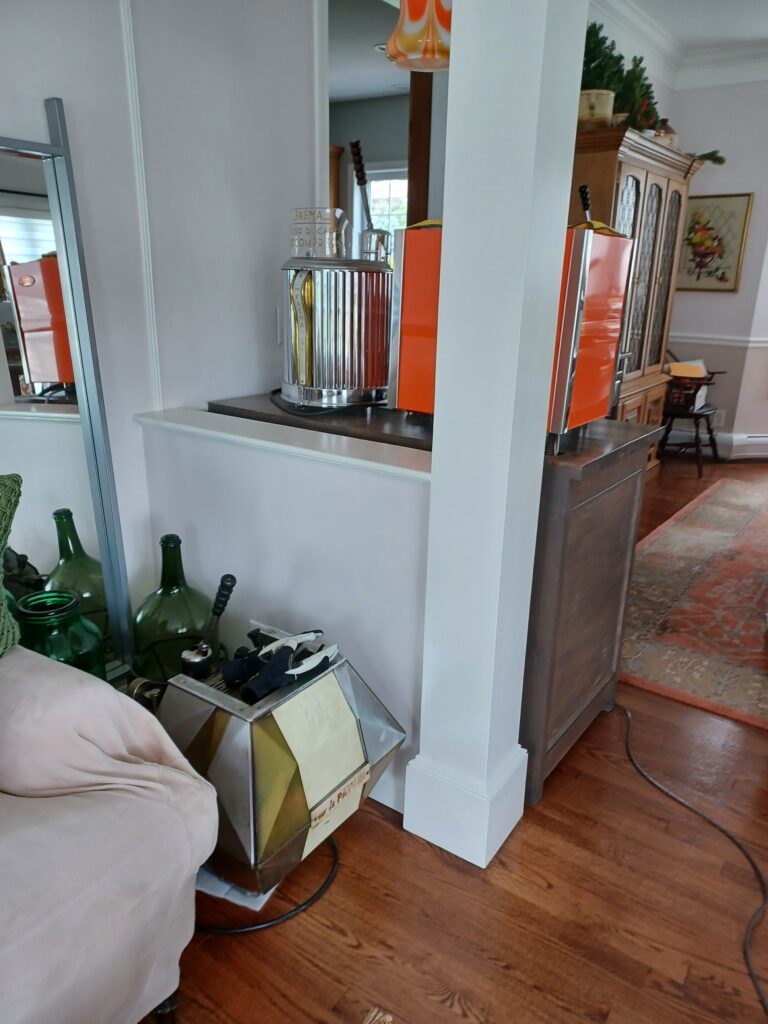
I hope when I restore this machine to honor Ron. If the seller sees this page, I want to thank you for allowing me to have this machine. Right now I have other projects I am working on, but I currently have the Concorso right by my main coffee bar. I will be very excited to work on the machine.
Leave a Reply